
Jerome R. Corsi, PhD
Who is Jerome R. Corsi, PhD- co-author of the book Unfit for Command: Swift Boat Veterans Speak Out Against John Kerry?


the opposite of a trough
4 August 2004, Dwight Meredith, Wampum:
"We don't do politics in the Department of Homeland Security."
Is Ridge right? Does the Homeland Security Department do politics? Let's look at the short history of the Department of Homeland Security to see if light can be shed on those questions...
MORE: Doing Politics
March 15 post from Ezra at Pandagon:
"Administration sources tell TIME that employees at the Department of Homeland Security have been asked to keep their eyes open for opportunities to pose the President in settings that might highlight the Administration's efforts to make the nation safer. The goal, they are being told, is to provide Bush with one homeland-security photo-op a month."
[Source: Time Magazine: March 2004]
John O'Neill: stalking Kerry for 33 years

Media Matters has more on O'Neill's GOP ties, dating back to Nixon:
"During the CNN interview [with O'Neill], [Wolf] Blitzer reported that former President Richard Nixon had urged O'Neill to publicly counter Kerry on The Dick Cavett Show, but there is more to the story. O'Neill was a creation of the Nixon administration, as Joe Klein detailed in the January 5 issue of The New Yorker. Former Nixon special counsel Chuck Colson told Klein that Kerry was an 'articulate' and 'credible leader' of those veterans calling for an end to the Vietnam War and therefore 'an immediate target of the Nixon Administration.' As such, the Nixon administration found it necessary to 'create a counterfoil' to Kerry. Colson recounted, 'We found a vet named John O'Neill and formed a group called Vietnam Veterans for a Just Peace. We had O'Neill meet the President, and we did everything we could do to boost his group.' Articles from the April 21 Houston Chronicle and the June 17, 2003, Boston Globe confirm close ties between O'Neill and the Nixon administration."
"Beyond his role in the Nixon administration's strategy to undermine Kerry in the 1970s, O'Neill is also connected to Supreme Court Justice William Rehnquist (a Nixon appointee) and to former President George H.W. Bush, according to Houston Chronicle articles from March 31 and April 21. In the late 1970s, O'Neill clerked for Rehnquist; in 1990, according to an October 7, 1991, report by Texas Lawyer, the former President Bush considered O'Neill for a federal judgeship vacancy."
MORE:
Media Matters: Who is John O'Neill?
Salon.com: Different decade, same dirty tricks
Salon.com: Swiftboat Veterans for "Truth"
Salon.com: Smear Boat Veterans for Bush
NBC News: Nixon targeted Kerry for anti-war views
"4 more years of hell"
Doctors and Torture
Robert Jay Lifton, M.D.
New England Journal of Medicine
Volume 351:415-416
July 29, 2004
Number 5
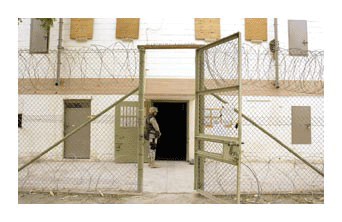
There is increasing evidence that U.S. doctors, nurses, and medics have been complicit in torture and other illegal procedures in Iraq, Afghanistan, and Guantanamo Bay. Such medical complicity suggests still another disturbing dimension of this broadening scandal.
We know that medical personnel have failed to report to higher authorities wounds that were clearly caused by torture and that they have neglected to take steps to interrupt this torture. In addition, they have turned over prisoners' medical records to interrogators who could use them to exploit the prisoners' weaknesses or vulnerabilities. We have not yet learned the extent of medical involvement in delaying and possibly falsifying the death certificates of prisoners who have been killed by torturers.
A May 22 article on Abu Ghraib in the New York Times states that "much of the evidence of abuse at the prison came from medical documents" and that records and statements "showed doctors and medics reporting to the area of the prison where the abuse occurred several times to stitch wounds, tend to collapsed prisoners or see patients with bruised or reddened genitals."1 According to the article, two doctors who gave a painkiller to a prisoner for a dislocated shoulder and sent him to an outside hospital recognized that the injury was caused by his arms being handcuffed and held over his head for "a long period," but they did not report any suspicions of abuse. A staff sergeant–medic who had seen the prisoner in that position later told investigators that he had instructed a military policeman to free the man but that he did not do so. A nurse, when called to attend to a prisoner who was having a panic attack, saw naked Iraqis in a human pyramid with sandbags over their heads but did not report it until an investigation was held several months later.
A June 10 article in the Washington Post tells of a long-standing policy at the Guantanamo Bay facility whereby military interrogators were given access to the medical records of individual prisoners.2 The policy was maintained despite complaints by the Red Cross that such records "are being used by interrogators to gain information in developing an interrogation plan." A civilian psychiatrist who was part of a medical review team was "disturbed" about not having been told about the practice and said that it would give interrogators "tremendous power" over prisoners.
Other reports, though sketchier, suggest that the death certificates of prisoners who might have been killed by various forms of mistreatment have not only been delayed but may have camouflaged the fatal abuse by attributing deaths to conditions such as cardiovascular disease.3
Various medical protocols - notably, the World Medical Association Declaration of Tokyo in 1975 - prohibit all three of these forms of medical complicity in torture. Moreover, the Hippocratic Oath declares, "I will use treatment to help the sick according to my ability and judgment, but never with a view to injury and wrongdoing."
To be a military physician is to be subject to potential moral conflict between commitment to the healing of individual people, on the one hand, and responsibility to the military hierarchy and the command structure, on the other. I experienced that conflict myself as an Air Force psychiatrist assigned to Japan and Korea some decades ago: I was required to decide whether to send psychologically disturbed men back to the United States, where they could best receive treatment, or to return them to their units, where they could best serve combat needs. There were, of course, other factors, such as a soldier's pride in not letting his buddies down, but for physicians this basic conflict remained.
American doctors at Abu Ghraib and elsewhere have undoubtedly been aware of their medical responsibility to document injuries and raise questions about their possible source in abuse. But those doctors and other medical personnel were part of a command structure that permitted, encouraged, and sometimes orchestrated torture to a degree that it became the norm - with which they were expected to comply - in the immediate prison environment.
The doctors thus brought a medical component to what I call an "atrocity-producing situation" - one so structured, psychologically and militarily, that ordinary people can readily engage in atrocities. Even without directly participating in the abuse, doctors may have become socialized to an environment of torture and by virtue of their medical authority helped sustain it. In studying various forms of medical abuse, I have found that the participation of doctors can confer an aura of legitimacy and can even create an illusion of therapy and healing.
The Nazis provided the most extreme example of doctors' becoming socialized to atrocity.4 In addition to cruel medical experiments, many Nazi doctors, as part of military units, were directly involved in killing. To reach that point, they underwent a sequence of socialization: first to the medical profession, always a self-protective guild; then to the military, where they adapted to the requirements of command; and finally to camps such as Auschwitz, where adaptation included assuming leadership roles in the existing death factory. The great majority of these doctors were ordinary people who had killed no one before joining murderous Nazi institutions. They were corruptible and certainly responsible for what they did, but they became murderers mainly in atrocity-producing settings.
When I presented my work on Nazi doctors to U.S. medical groups, I received many thoughtful responses, including expressions of concern about much less extreme situations in which American doctors might be exposed to institutional pressures to violate their medical conscience. Frequently mentioned examples were prison doctors who administered or guided others in giving lethal injections to carry out the death penalty and military doctors in Vietnam who helped soldiers to become strong enough to resume their assignments in atrocity-producing situations.
Physicians are no more or less moral than other people. But as heirs to shamans and witch doctors, we may be seen by others - and sometimes by ourselves - as possessing special magic in connection with life and death. Various regimes have sought to harness that magic to their own despotic ends. Physicians have served as actual torturers in Chile and elsewhere; have surgically removed ears as punishment for desertion in Saddam Hussein's Iraq; have incarcerated political dissenters in mental hospitals, notably in the Soviet Union; have, as whites in South Africa, falsified medical reports on blacks who were tortured or killed; and have, as Americans associated with the Central Intelligence Agency, conducted harmful, sometimes fatal, experiments involving drugs and mind control.
With the possible exception of the altering of death certificates, the recent transgressions of U.S. military doctors have apparently not been of this order. But these examples help us to recognize what doctors are capable of when placed in atrocity-producing situations. A recent statement by the Physicians for Human Rights addresses this vulnerability in declaring that "torture can also compromise the integrity of health professionals."5
To understand the full scope of American torture and abuse at Abu Ghraib and other prisons, we need to look more closely at the behavior of doctors and other medical personnel, as well as at the pressures created by the war in Iraq that produced this behavior. It is possible that some doctors, nurses, or medics took steps, of which we are not yet aware, to oppose the torture. It is certain that many more did not. But all those involved could nonetheless reveal, in valuable medical detail, much of what actually took place. By speaking out, they would take an important step toward reclaiming their role as healers.
Source Information: Department of Psychiatry, Harvard Medical School, Boston.
References:
1) Zernike K. Only a few spoke up on abuse as many soldiers stayed silent. New York Times. May 22, 2004:A1.
2) Slevin P, Stephens J. Detainees' medical files shared: Guantanamo interrogators' access criticized. Washington Post. June 10, 2004:A1.
3) Squitieri T, Moniz D. U.S. Army re-examines deaths of Iraqi prisoners. USA Today. June 28, 2004.
4) Lifton RJ. The Nazi doctors: medical killing and the psychology of genocide. New York: Basic Books, 1986.
5) Statement of Leonard Rubenstein, executive director, Physicians for Human Rights, June 2, 2004. (Accessed July 9, 2004.)
More...
TalkLeft
Body and Soul
Hullabaloo
Steven H. Miles, The Lancet: Abu Ghraib: its legacy for military medicine
Pakistan plays down impact of al-Qaeda arrest
3 August 2004, Farhan Bokhari, Financial Times
Full Text:
ISLAMABAD - Information gleaned from a prominent al-Qaeda leader arrested in Pakistan last week did not provide sufficient evidence of an imminent terrorism threat in the US, senior Pakistani officials familiar with the case said yesterday.
Last week's arrest created speculation that Ahmed Khalfan Ghailani, a Tanzanian wanted in connection with the 1998 attacks at two US embassies in east Africa, might have provided fresh information on al-Qaeda's operational plans.
According to one report, a Pakistani minister claimed that e-mails retrieved from Mr Ghailani's computer revealed new plans for attacks in the US and UK.
"There is a lot of unnecessary speculation making the rounds," a senior Pakistani official said. "The fact is that Ghailani may have been on the run for so long that there can be no basis for assuming that he was central to the planning in Europe and the US."
Pakistani authorities yesterday also denied media reports that a valuable al-Qaeda suspect had been in government detention since mid-July. The suspect was reported to have been the source of information leading to the heightened security alerts in Washington and New York City.
The interior minister denied a computer expert who managed an e-mail communication system for key al-Qaeda figures was arrested last month. "We have not arrested anyone like this, I can tell you categorically," Faisal Saleh Hayat told the FT.
Yesterday's New York Times reported the July 13 arrest of Muhammad Naeem Noor Khan, 25, who allegedly helped operate a secret communications system using coded messages to transfer information for al-Qaeda.
Al-Qaeda's largely amorphous structure, dependent on autonomous cells in different parts of the world, "made it highly unlikely that its command and control structures for future attacks in the US" would operate from a distant country such as Pakistan, the official said.
"The circumstances suggest that Ahmed Khalfan Ghailani had been ineffective for a long time, on the defensive, being chased and on the run," said Lieutenant General (Rtd) Talat Masood, a Pakistani commentator.
Circumstantial evidence available so far suggested Mr Ghailani had been on the run in the Pakistan-Afghan region, unable to play a role as aplanner of terrorist attacks in the western world, Lt Gen Masood said.
Other officials said the information extracted from Mr Ghailani was more likely to concern the whereabouts of other al-Qaeda leaders and operatives. Interrogations of previously arrested suspects are believed to have yielded similar information.
Source: Bob Harris @ This Modern World
The 9/11 Commission & Abu Ghraib
The Progress Report, Center for American Progress
4 August 2004, David Sirota, Christy Harvey, Judd Legum and Jonathan Baskin
9/11 Commission Strikes Back
"This week, President Bush claimed he was embracing the bold institutional changes proposed by the 9/11 Commission by creating this national intelligence director. In reality, he is resisting key elements of the proposal, such as putting the new position in the Cabinet (and thus ensuring the new director would stay in the loop), giving the director the power to hire and fire, or granting the director control of his budget. The result? A weak figurehead without power to effectively oversee the 15 agencies in the U.S. intelligence community. Key 9/11 Commissioners joined members of Congress yesterday to argue that the proposed national intelligence director must have the power to hire, fire, and control a budget. Period."
Abu Ghraib: The Blame Game
"The mainstream media – after splashing their front pages with salacious photos – has largely lost interest in the prison abuse scandal at Abu Ghraib. The administration and high-ranking military officials, however, have continued their efforts to pin all the blame on "a few bad apples.
But as top officials play the blame game, official investigations into who was responsible are still ongoing. Sen. Susan Collins (R-ME) said "there are some serious unanswered questions."
not your father's cyberterrorism

"But our reaction to this, Ray, is setting up the ultimate cyberterrorist attack where in the future all the terrorist has to do is put together a very elaborate plan-- well produced with some key graphics showing that they know about a target, have surveilled it-- and then put a threat in it. All they have to do is phone it in, and we start shutting down cities. They don't even have to do anything to put themselves at risk of getting captured; yet what we are seeing is that they can shut down cities."
Larry Johnson
3 August 2004, PBS Newshour
(interviewed by Ray Suarez)

- glassfrequency
Bush knew (he was lying)
They Knew...
3 August 2004, David Sirota & Christy Harvey, In These Times
Despite the whitewash, we now know that the Bush administration was warned before the war that its Iraq claims were weak.
See also:
Sirotablog

Krugman pays attention
Reading the Script
3 August 2004, Paul Krugman, New York Times
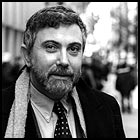
A message to my fellow journalists: check out media watch sites like campaigndesk.org, mediamatters.org and dailyhowler.com. It's good to see ourselves as others see us. I've been finding The Daily Howler's concept of a media "script," a story line that shapes coverage, often in the teeth of the evidence, particularly helpful in understanding cable news.
For example, last summer, when growth briefly broke into a gallop, cable news decided that the economy was booming. The gallop soon slowed to a trot, and then to a walk. But judging from the mail I recently got after writing about the slowing economy, the script never changed; many readers angrily insisted that my numbers disagreed with everything they had seen on TV.
If you really want to see cable news scripts in action, look at the coverage of the Democratic convention.
Commercial broadcast TV covered only one hour a night. We'll see whether the Republicans get equal treatment. C-Span, on the other hand, provided comprehensive, commentary-free coverage. But many people watched the convention on cable news channels - and what they saw was shaped by a script portraying Democrats as angry Bush-haters who disdain the military.
If that sounds like a script written by the Republicans, it is. As the movie "Outfoxed" makes clear, Fox News is for all practical purposes a G.O.P. propaganda agency. A now-famous poll showed that Fox viewers were more likely than those who get their news elsewhere to believe that evidence of Saddam-Qaeda links has been found, that W.M.D. had been located and that most of the world supported the Iraq war.
CNN used to be different, but Campaign Desk, which is run by The Columbia Journalism Review, concluded after reviewing convention coverage that CNN "has stooped to slavish imitation of Fox's most dubious ploys and policies." Seconds after John Kerry's speech, CNN gave Ed Gillespie, the Republican Party's chairman, the opportunity to bash the candidate. Will Terry McAuliffe be given the same opportunity right after President Bush speaks?
Commentators worked hard to spin scenes that didn't fit the script. Some simply saw what they wanted to see. On Fox, Michael Barone asserted that conventioneers cheered when Mr. Kerry criticized President Bush but were silent when he called for military strength. Check out the video clips at Media Matters; there was tumultuous cheering when Mr. Kerry talked about a strong America.
Another technique, pervasive on both Fox and CNN, was to echo Republican claims of an "extreme makeover" - the assertion that what viewers were seeing wasn't the true face of the party. (Apparently all those admirals, generals and decorated veterans were ringers.)
It will probably be easier to make a comparable case in New York, where the Republicans are expected to feature an array of moderate, pro-choice speakers and keep Rick Santorum and Tom DeLay under wraps. But in Boston, it took creativity to portray the delegates as being out of the mainstream. For example, Bill Schneider at CNN claimed that according to a New York Times/CBS News poll, 75 percent of the delegates favor "abortion on demand" - which exaggerated the poll's real finding, which is that 75 percent opposed stricter limits than we now have.
But the real power of a script is the way it can retroactively change the story about what happened.
On Thursday night, Mr. Kerry's speech was a palpable hit. A focus group organized by Frank Luntz, the Republican pollster, found it impressive and persuasive. Even pro-Bush commentators conceded, at first, that it had gone over well.
But a terrorism alert is already blotting out memories of last week. Although there is now a long history of alerts with remarkably convenient political timing, and Tom Ridge politicized the announcement by using the occasion to praise "the president's leadership in the war against terror," this one may be based on real information. Regardless, it gives the usual suspects a breathing space; once calm returns, don't be surprised if some of those same commentators begin describing the ineffective speech they expected (and hoped) to see, not the one they actually saw.
Luckily, in this age of the Internet it's possible to bypass the filter. At c-span.org, you can find transcripts and videos of all the speeches. I'd urge everyone to watch Mr. Kerry and others for yourself, and make your own judgment.
... now if only he'd included that Bill Schneider, CNN political analyst, is a resident fellow at the American Enterprise Institute- something that CNN rarely, if ever, bothers to mention on air... - glassfrequency
William Schneider American Enterprise Institute 1150 Seventeenth Street, N.W. Washington, DC 20036 Phone: 202-515-2803 Assistant: 202-862-5917 Fax: 202-515-2853 E-mail: bill.schneider@turner.com
Child Prisoners in Iraq
Bradford Plumer @ Mother Jones:
reminds us that the U.S. mainstream media have yet to investigate this story:
Children in Abu Ghraib
From The Sunday Herald in Scotland, Neil McKay writes:
Iraq's Child Prisoners
"A Sunday Herald investigation has discovered that coalition forces are holding more than 100 children in jails such as Abu Ghraib. Witnesses claim that the detainees - some as young as 10 - are also being subjected to rape and torture..."
Earlier posts:
Norway and Denmark protest child abuse in Iraq
Bob Harris @This Modern World: Children at Abu Ghraib
New classified documents: Abu Ghraib
The Secret File of Abu Ghraib
28 July 2004, Osha Gray Davidson, Rolling Stone
New classified documents implicate U.S. forces in rape and sodomy of Iraqi prisoners
Link provided by Tom Tomorrow at: This Modern World
4_orange@newyork.con
From Billmon @ The Whiskey Bar:
"I'm just glad Kerry didn't get a bigger bounce in the polls from the convention, or the White House would have taken us to Defcon 1 by now."
Read the entire post: An Amazing Series of Coincidences
( then click on an orange )
"Islamist" alert
Islamist: 1) a believer or follower of Islam. 2) a believer or follower of Islamic fundamentalism (or Islamism).
Islamicist: 1) a specialist in the study of Islam. 2) a member or supporter of an Islamic revivalist movement; an Islamist.
Islamist terrorist: a terrorist who subscribes to a radical form of Islamic fundamentalism (or Islamism).
Arab, Muslim: what America hears when you write or say Islamist, Islamicist or Islamist terrorist.
When the Committee on the Present Danger recently rose from the dead, many on the Left dismissed them as irrelevant and anachronistic-- a desperate attempt to reenergize the neoconservative movement.
While I never believed that they would become a powerful, political force, I did expect-- and am now seeing-- that they might be especially effective at shifting the language when describing their "war on terror" -- shifting the language of politicians, radio and the talking heads of television.
When Joe Lieberman, James Woolsey and Jon Kyl were making the rounds on news and talk shows, they repeatedly used the term "Islamist" to define and label our enemy in what was portrayed as an ongoing, world-wide war against American democracy. (While the 9/11 Commission Report refers to "Islamist terrorism," the CPD and its proponents speak about the war against Islamists-- a much larger universe of combatants than "Islamist terrorists.")
Until recently, the commonly-used terminology to describe "the enemy" in Bush's "war on terror" has been Islamic fundamentalists-- radicals or jihadists-- or simply "Islamic terrorists." (While jihadist is also problematic and misleading-- for anyone who understands its religious significance-- it is too late to rescue this widely-used word from the lexicon of terrorism terminology.)
Within days, Republican senators were using the term Islamist-- both as a noun and as an adjective-- then the White House, then Fox News. Tonight on CNN, in an interview with a "terrorism expert," the anchor asked how we were ever going to defeat the "Islamists." (The guest, to his credit, refused to mirror the anchor's terminology and repeatedly referred to "jihadists.")
I wonder how the word Islamist translates into Arabic? Might it be heard and read as "Muslim?"
We cannot claim that we are not fighting a war against Islam and then use the word "Islamist" to define our enemy-- if we expect to maintain this distinction.
Prior to the CPD's campaign to spread the word about the Committee's work, "Islamist" only appeared in the most right-wing, anti-Arab, anti-Muslim writing. Front Page magazine, the Heritage Foundation and Free Republic, among others, are especially fond of the term-- as is Bush's recess-appointment to the Institute of Peace, Daniel Pipes-- propagandist and founder of Campus Watch.
The words Islamist and Islamicist are often used interchangeably. Might this be a convenient way to blur the distinction between terrorists and Islamicists-- scholars of Islamic and Arab culture? This confusion in terminology can create clouds of suspicion over journalists, scholars and religious leaders who express sympathy or solidarity with Arabs or Islam. This has long been the primary strategy employed by Middle East Forum's Campus Watch in their attempts to intimidate students and professors on college campuses across America.
We must not allow these words-- Islamist or Islamicist-- to enter the lexicon of the Left when describing the fight against terrorism. If we do, we are allowing bigoted, anti-Muslim rhetoric to define our foreign policy.
Currently, a google search for "Islamist" will produce the usual suspects-- sites about Islam, and right-wing sites about terrorists. How long before the Islamist-as-terrorist usage becomes common in the mainstream-- NPR, PBS, commercial broadcast and print journalism?
Google for yourself and watch how propaganda grows.
glassfrequency
Updates::
Disinfopedia: Political Islam
High Time Bush Defines the Enemy
2 August 2004, Ronald Bruce St John, Foreign Policy in Focus
The other Woolsey- the sane one
Lynn Woolsey and the American way
28 July 2004, R. V. Scheide, North Bay Bohemian
Congresswoman Lynn Woolsey has met the enemy, and it is us. To be more specific, it's the U.S. Department of Homeland Security (DHS). Two years ago, Woolsey, a six-term Democrat who has represented Marin and Sonoma counties in the U.S. House of Representatives since 1992, opposed creation of an overarching federal homeland security department, saying the "attempt at governmental overhaul may take us too far down the wrong road, and may make us less safe."
Earlier this month, when DHS Director Tom Ridge asked the U.S. Department of Justice to investigate what legal steps would have to be taken in order to postpone November's presidential election in the event of a terrorist attack, Woolsey's worst fears were realized.
"I was outraged," she says by phone from her office in Washington. "The postponement of the November election, or any further consideration of such a proposal, would be the greatest threat to date to our democratic process."
Woolsey immediately went into action, penning a letter to Ridge insisting that he "take no further steps to postpone this year's presidential election." She circulated the letter in the House, and by July 15, 191 of her colleagues--190 Democrats and Texas Republican Ron Paul--had signed on. The letter was instrumental in forcing House Republicans to draft a resolution stating that the presidential election would never be canceled because of a terrorist attack.
For Ridge, the controversy over the proposed canceling of the election has added more fuel to the fire of critics such as Woolsey, who charge that the agency's color-coded alert system is ineffective and prone to political manipulation. For instance, Ridge's early July announcement that al Qaida plans to disrupt this year's election season came right after Democratic presidential candidate Sen. John Kerry selected Sen. John Edwards as his running mate, diverting media attention from the Kerry-Edwards story and back to terrorism. Yet even though Ridge called the threat "credible," DHS didn't raise the alert level from yellow to orange or release any specific information on the threat.
"I am deeply concerned that the Bush administration is copying and pasting old terror alerts that were later found to be fabricated," Rep. Robert Wexler, D-Fla., told the New York Daily News. "This administration has a long track record of using deceptive tactics for political gain. One cannot help but question whether their aim was to deflect attention from the Kerry-Edwards ticket during their inaugural week."
Other threat-level warnings that critics claim were politically motivated include the three orange alerts issued during the run-up to the Iraq war, including one on the eve of a massive global antiwar protest. Ridge has repeatedly denied that the threat alerts are politically timed.
Woolsey's concerns about the color-coded alert system and DHS in general are more practical than political: the alert system just doesn't seem to work that well, and DHS is diverting scarce resources from preventative measures that could do a better job stopping terrorist attacks.
"The risk is that people will get numb," she says about the on-again, off-again alert system. "We're telling them to be careful--but don't forget to go to the mall."
As Woolsey noted in her argument against forming the agency in 2002, "the greatest weakness in our pre-9-11 security was the lack of communication and coordination in intelligence and law-enforcement agencies." The creation of DHS was supposed to improve that communication, but a report by the nonpartisan Government Accountability Office released in July found that the agency has so far done little to improve the way it communicates threat information to federal agencies and states.
"The responses we received to our questionnaires indicated continuing confusion on the part of federal agencies, states and localities regarding the process and methods that the DHS uses to communicate changes in the national threat level or recommendations for heightened security measures in specific regions or sectors," the report found. "Without clearly defined and consistently applied communication policies and procedures, DHS may have difficulty . . . effectively communicating the methods, timing and content of guidance and information . . . the department provides to federal agencies and states."
In March, Woolsey introduced legislation that calls for a Sensible Multilateral Response to Terrorism (SMART). Crafted with the help of Physicians for Social Responsibility, SMART has five components, including developing multilateral partnerships with other nations to track and detain terrorists while respecting human rights and civil liberties; better monitoring of weapons of mass destruction; addressing root causes of terrorism such as hunger and poverty; finding alternatives to war; and reprioritizing spending, particular on homeland security.
"SMART security calls for fewer outdated Cold War weapons systems and a more serious financial commitment to homeland security and first responders," Woolsey writes in SMART's position paper. "Energy independence--especially support for development of renewable energy resources--is another centerpiece of SMART security because nothing threatens us more than reliance on Middle Eastern oil."
Woolsey is particularly concerned that neither DHS nor the Bush administration has done little to increase funding for local area responders. After 9-11, for instance, the National Guard was deployed on the Golden Gate Bridge to protect against possible terrorist attacks. When the guard was pulled off the bridge months later, the Golden Gate Bridge and Transportation District had to hire additional security employees at a cost that has so far reached $2.5 million, paid for with bridge toll receipts, according to district spokesperson Mary Currie.
"We've been on a high alert status since 9-11," Currie says. While the nation is currently at an elevated or code yellow threat level, Currie explains that the four major agencies in charge of bridge security--the bridge district, the FAA, the CHP and the Park Service--are constantly on what she calls an "orange-minus" level. Currie adds that the bridge district is in the process of receiving its first grant from the DHS.
"Instead of investing in homeland security, we're still cutting taxes," Woolsey says. She points to known security problems that still exist, such as cargo container shipping, as proof that the United States in less safe thanks to the present administration. "We have an administration that talks a lot about homeland security. They're really good when it comes to rhetoric. They're really bad when it comes to follow-through."
On July 22, the House voted unanimously to support HR 728, the resolution to protect the integrity of America's elections drafted by Republicans but inspired by Woolsey's letter.
Woolsey's proud of the achievement, just as she's proud to serve one of the most progressive districts in the nation. But she's concerned about the future. The upcoming presidential election is vitally important, and she urges her constituents to call their friends around the country to urge them to vote.
"If we don't change this administration," she says, "we won't know this country four years from now."
Bush opposes nuclear weapons inspections
31 July 2004, Dafna Linzer, The Washington Post
WASHINGTON — In a shift of U.S. policy, the Bush administration announced this week that it will oppose provisions for inspections and verification as part of an international treaty that would ban production of nuclear-weapons materials.
For several years the United States and other nations have been pursuing the treaty, which would ban new production by any state of highly enriched uranium and plutonium for weapons. At U.N.-sponsored Conference on Disarmament in Geneva this week, the Bush administration told other nations it still supported a treaty, but not verification.
The planned treaty wouldn't affect existing stockpiles or production for non-weapons purposes, such as energy or medical research. Mainly, it was designed to impose restraints on India, Pakistan and Israel, whose nuclear programs operate outside the reach of Nuclear Nonproliferation Treaty inspectors.
Administration officials said they made the decision after concluding such a system would cost too much, require overly intrusive inspections and wouldn't guarantee compliance with the treaty.
Administration officials declined to explain in detail how they believed U.S. security would be harmed by creating a plan to monitor the treaty.
Arms-control specialists reacted negatively, saying the change in U.S. position will dramatically weaken any treaty and make it harder to prevent nuclear materials from falling into the hands of terrorists.
For Comments on the article by Digby (!) at Hullabaloo:
Administration now opposes inspections as part of nuclear treaty
4 more years
"Iraq is not just about Iraq."
- Karl Rove
soccerdad @ The Left Coaster
links to this comprehensive review of the Bush administration's middle east strategy:
Top 21 Pieces of Evidence ...
2 August 2004, Tom Ball, Political Strategy
Playing Politics with Terror
1 August 2004, David Neiwert, Orcinus
excerpt:
It's bad enough that John Ashcroft's Justice Department treats domestic terrorism like an afterthought. What's outrageous is that it now appears to have raised the threat of such terrorism-- groundlessly-- to put a cloud over the Democratic National Convention.
And in the meantime, evidence continues to mount that the FBI's actual handling of domestic terrorism is dangerously inadequate.
I previously mentioned that the press reaction to the FBI's warnings that right-wing extremists might target media vehicles in Boston last week was strangely muted. But what wasn't immediately apparent was the likelihood that the reports themselves actually constituted a kind of disinformation.
Now questions are being raised about the warnings, and the reasons for the FBI circulating them in the first place. The most significant of these is from the Southern Poverty Law Center's Mark Potok, who was interviewed at length by Glynn Wilson about these warnings:
"We have had no indication whatsoever, not an inkling, that there is any kind of violent action planned by the radical right in Boston," Potok said. "We follow these groups quite closely."
How did the story-- that right-wing extremists planned to attack media vehicles-- get circulated in the first place?
MORE: Playing Politics with Terror
Islamist Database
Muslims Alarmed as Germany Plans Islamist Database
8 July 2004, Mark Trevelyan, Security Correspondent BERLIN (Reuters)
Germany said Thursday it would create a central database on suspected radical Islamists, provoking concern from the country's large Muslim community.
Interior Minister Otto Schily also announced plans to boost the fight against terrorism by pooling intelligence from the three national security agencies in a new joint analysis center.
The moves, announced after two days of talks between Schily and interior ministers from the 16 states or 'Laender', are designed to strengthen Germany's defenses against terrorism by making its complex security structure work more efficiently.
Germany has stepped up its guard against radical Islamists since 2001, when three of the suicide hijackers involved in the Sept. 11 attacks on the United States turned out to be Arab students from Hamburg. Authorities are investigating about 150 cases involving alleged Islamic militants, and have conducted several prominent trials.
But a Muslim leader, reacting to news of the database, said innocent Muslims risked falling under suspicion unless the term 'Islamist' was properly defined. "When you speak about Islamism, you have to clarify what you mean by it. We are concerned that every Muslim could fall under this catch-all term, which is unacceptable," said Nadeem Elyas, chairman of the Central Council of Muslims in Germany. "We're worried that people may be caught up arbitrarily who have nothing to do with terrorism. By arbitrarily, I mean at the discretion of officials or authorities, which would be a violation of data protection rules."
A spokesman for the federal data protection commissioner said it was important to establish clear rules on who could enter or view data on suspects, and how long entries would be held in the system. Because of its historic experience of Nazi and Communist dictatorship, Germany has strict rules on data protection and on separating the functions of the police and the intelligence services. With its federal structure, it also has more than 30 bodies responsible for security -- a federal crime office and two spy agencies, plus police and domestic intelligence services in every state.
To avoid duplication and the risk of vital information falling between the cracks, Schily last month proposed bringing the state services under the direct control of their federal equivalents. But the idea has been vigorously resisted by interior ministers in the 16 Laender. The national police union said it was baffling to ordinary Germans why such questions were still being ponderously thrashed out nearly three years after Sept. 11. "One can only hope that international terrorism will show due consideration for German thoroughness," it said in a statement.
More: "Islamist" Alert
Subscribe to:
Posts (Atom)